What a Bi-Annual Maintenance Visit Actually Includes
Twice a year sounds like more than necessary until you consider that a furnace and an air conditioner run through two completely different seasons.
September 9, 2026 · 3 min read
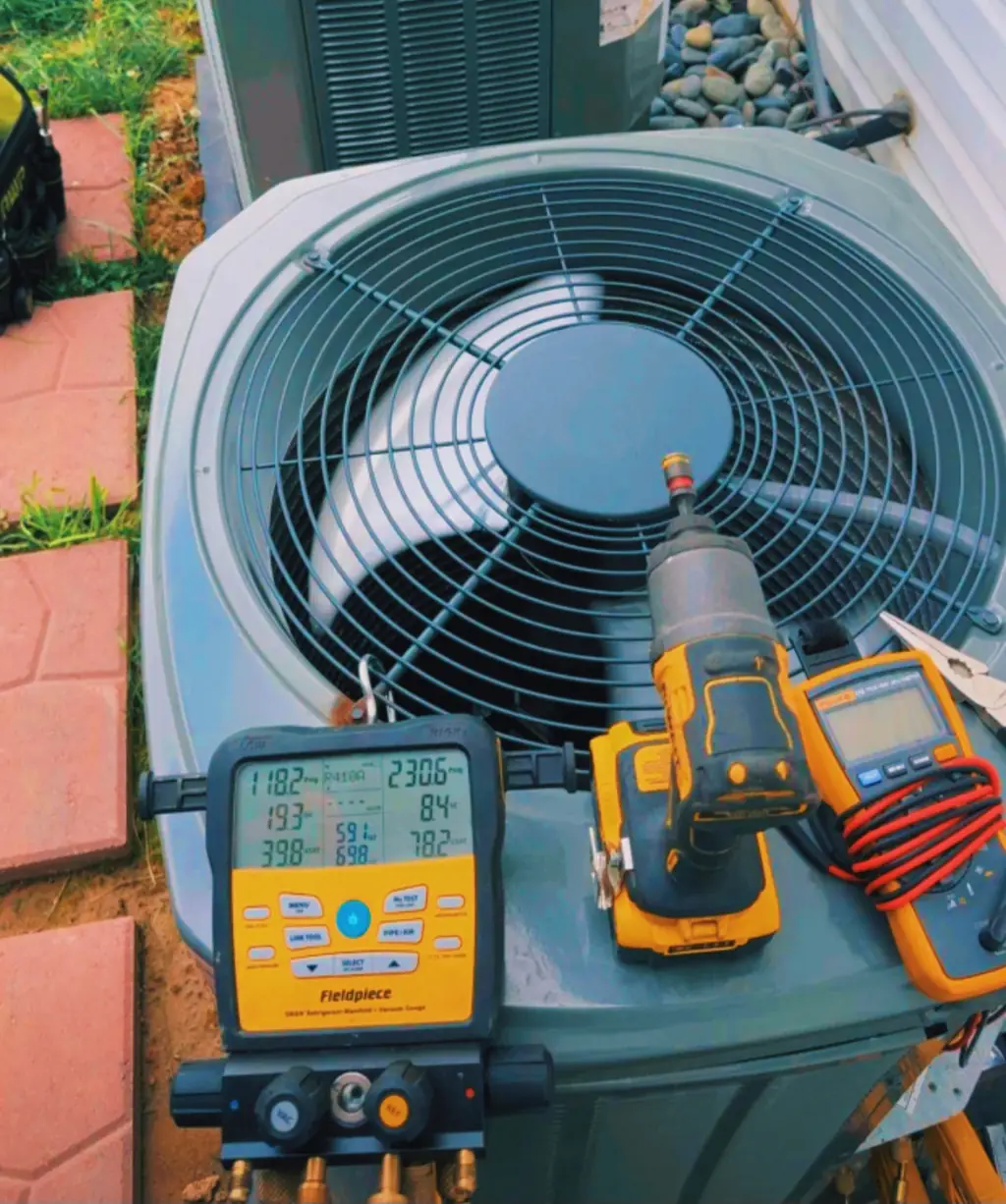
A single furnace or air conditioner runs through two very different seasons every year, a heating season and a cooling season, and each one stresses a different set of parts. A furnace checked in the fall, right before it has to run every day for months, catches ignition and heat exchanger problems before they turn into a no-heat call in January. An air conditioner checked in the spring, before the first real heat wave, catches a weak capacitor or a low refrigerant charge before it becomes a no-cool call in July. Checking a system only once a year means one of those two seasons goes unchecked every single year.
What gets checked on the cooling side
- Refrigerant charge, measured against the system's specifications rather than just topped off
- Electrical connections and contactors, tightened and tested under load
- The start and run capacitors, tested with a multimeter rather than judged by eye
- The condenser coil, cleaned of dust, grass clippings and cottonwood buildup
- The condensate drain, cleared so it can't back up mid-summer
- Thermostat calibration, so the temperature on the display matches the temperature in the room
What gets checked on the heating side
The furnace side of a fall visit covers the burners, the ignition system, gas pressure, and the heat exchanger, the part responsible for keeping combustion gases separate from the air actually blown into the house. A technician also checks the blower motor and belt where applicable, tests the safety controls that shut the furnace down if something's wrong, and checks or replaces the filter. None of these are dramatic checks on their own, but together they're the difference between a furnace that starts reliably on the first cold morning of the year and one that doesn't.
What it means for a homeowner day to day
The value of a maintenance visit isn't really the visit itself, it's everything that visit prevents. A capacitor caught weak in April doesn't fail during a heat wave in July when every technician in Belleville is already booked. A furnace's ignition system checked in October doesn't fail on the coldest night of the year. Archway's Pro and Prime Partner programs build this in as two visits a year rather than leaving it up to a homeowner to remember to call, along with priority scheduling with a 24-hour response guarantee, a discount on repairs and equipment, and a discounted rate on after-hours and emergency calls, never charged at overtime labor rates for program members.
What customers notice about the twice-a-year visits
One Archway customer, reviewing the company online, put it plainly: they come out twice a year to maintain and check the system, and when something went wrong in the past, they were fast to respond. That's really the whole point of a bi-annual schedule described in one sentence. Regular visits catch most problems before they turn into a call for help, and when something still goes wrong between visits, there's already a relationship and a service history in place.
The honest case for staying on a schedule
None of this is about selling a service contract for its own sake. A system that never gets looked at will eventually tell you something's wrong by failing, usually at the worst possible moment, a Sunday morning in January or a Saturday afternoon in the middle of a heat wave. A system checked twice a year tends to give a technician the chance to fix a small, cheap problem before it becomes an expensive one, and to do it on an ordinary Tuesday morning instead of an emergency call.
What a homeowner can do between visits
- Change or wash the air filter on the schedule printed on the filter itself, usually monthly for a standard filter
- Keep two feet of clearance around the outdoor unit year round, not just in summer
- Keep an eye on the thermostat display for anything unusual, like the temperature reading drifting from what the room actually feels like
- Note any new sound, smell, or short cycling and mention it at the next scheduled visit even if it seems minor
None of these replace a real inspection, but they help a technician catch a developing problem sooner, and they keep the system running the way it's supposed to in the months between the spring and fall visits.
Archway Cooling & Heating, (618) 234-2810
Call (618) 234-2810More articles
What Actually Fails on a Home Air Conditioner
The compressor gets blamed for almost everything, but most air conditioner failures start with parts a lot smaller and a lot cheaper.
What a Belleville Summer Does to Your Outdoor AC Unit
An outdoor condenser sits outside through five months of Belleville summer, and what lands on it during that time matters more than most homeowners realize.