Indoor Air Quality
A system that keeps the temperature right can still leave the air wrong
Purifiers, filters, humidifiers, dehumidifiers, ventilators, germicidal UV and carbon monoxide alarms, sized to the house rather than sold off a shelf.
Chapter 01
The furnace can be running fine and the air still be the problem
A house can hold the exact temperature you set and still leave you with dry sinuses in January, a musty smell in the basement every August, or a layer of dust that comes back within a day of cleaning it off. None of that shows up on a thermostat, because a thermostat only measures heat. It says nothing about humidity, filtration, fresh air exchange, or the one thing a family can't smell, see, or feel until it's too late, which is carbon monoxide building up from a cracked heat exchanger or a blocked flue.
Those are separate problems from heating and cooling, and they need separate equipment. Air purifiers and better filters deal with dust, dander and airborne particles. Humidifiers and dehumidifiers deal with the moisture swing between a dry Illinois winter and a wet Metro East summer. Ventilator systems bring in fresh outdoor air without losing the conditioned air you already paid to heat or cool. Germicidal UV lamps and carbon monoxide sensors and alarms are their own category again, closer to safety equipment than comfort equipment.
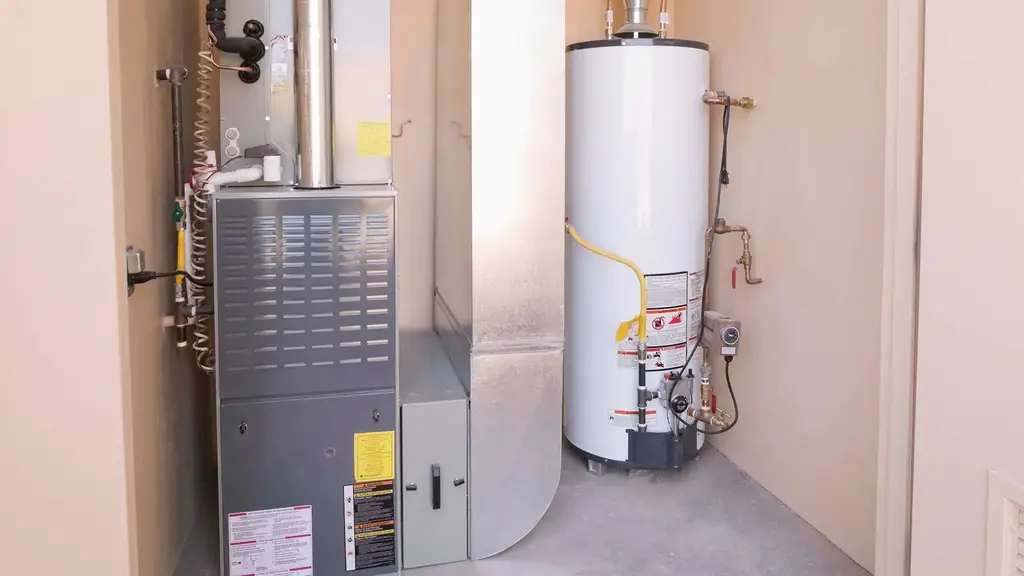
Furnace and water heater installed in a residential utility closet
Matching the equipment to the house instead of the other way around
The starting point is what the house is actually doing wrong, not which box happens to be in stock. A house with a damp crawlspace or a basement that smells musty by July calls for a dehumidifier sized to the space, not a purifier. A house where everyone wakes up with dry throats every winter calls for a whole-home humidifier tied into the furnace, not a countertop unit moved from room to room. A newer, tightly sealed home that never seems to air out calls for a ventilator system that exchanges stale air for fresh air on a schedule, rather than opening windows and losing the heating or cooling you just paid for.
Carbon monoxide sensors and alarms get evaluated on their own, separate from comfort concerns entirely, because a fuel-burning furnace or water heater is the one place in the house where a fault can turn dangerous without any smell or sound to warn you first.
Chapter 03
Equipment that keeps working after the install truck leaves
Air quality equipment only does its job if it keeps running the way it was set up to run. A humidifier needs its water panel checked on a schedule. A UV lamp loses effectiveness as the bulb ages and needs replacing on its own timeline, not whenever someone happens to notice. Carbon monoxide alarms need to actually work the day they're needed, which means testing them rather than assuming the battery is fine.
Customers on one of our maintenance plans get this kind of equipment checked as part of the same visit that covers the furnace and air conditioner, so indoor air quality equipment doesn't become the one thing nobody remembers to look at until something smells wrong or a filter light won't turn off.
Archway Cooling & Heating — indoor air quality equipment installed and serviced across Belleville and the Metro East. Call (618) 234-2810.